White Grubs in Your Michigan Lawn: What to Look For and When to Treat
White grubs are one of the most destructive lawn pests in Michigan — and one of the most misunderstood. By the time most homeowners notice the damage, the worst of the feeding is already done. Pure Green helps Michigan homeowners get ahead of grub damage with the right identification and treatment approach timed to Michigan’s pest calendar.
What Are White Grubs?
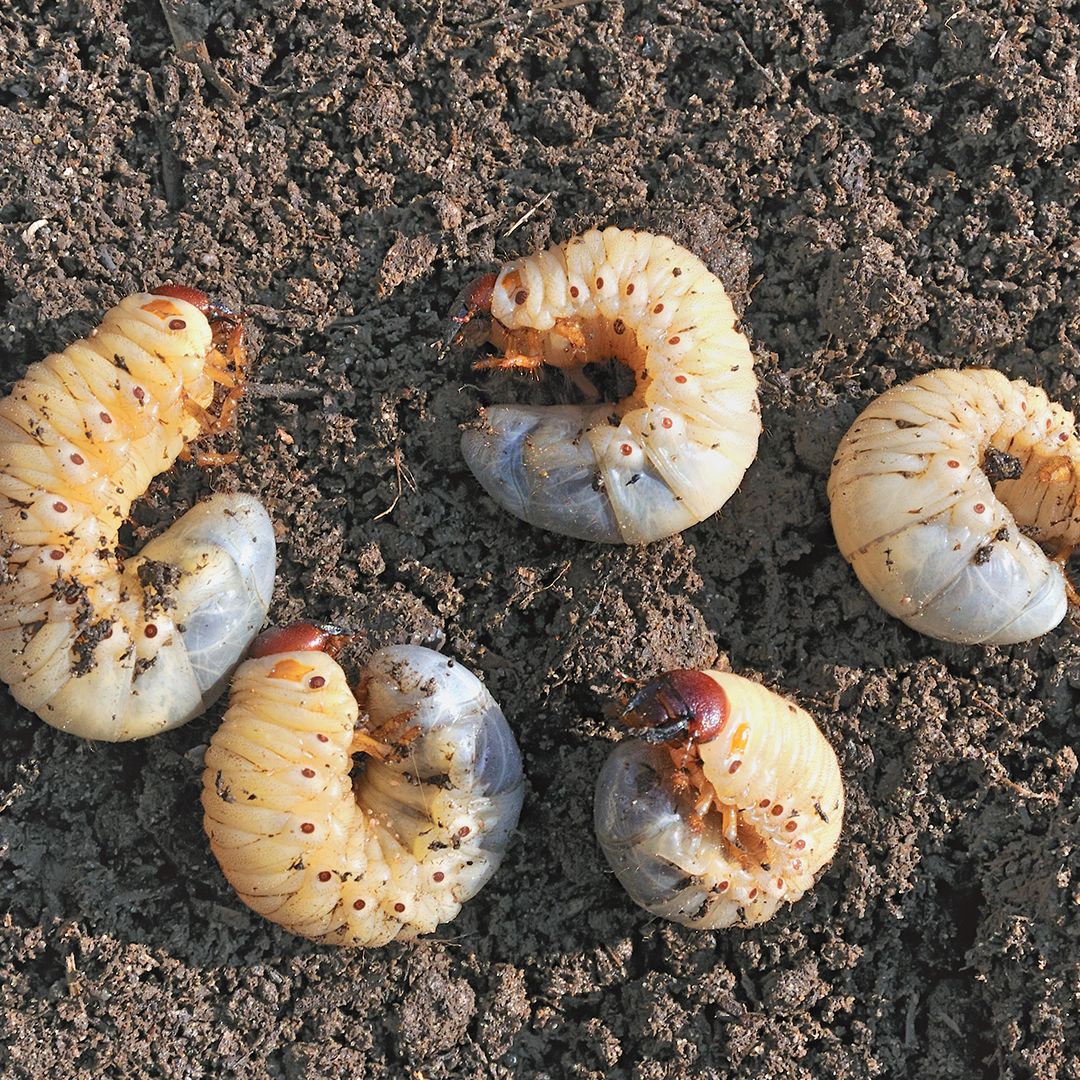
White grubs are the larval stage of several beetle species — most commonly the Japanese beetle, European chafer, and masked chafer in Michigan. They are creamy-white, C-shaped larvae that live in the soil and feed on grass roots from mid-summer through fall. A healthy Michigan lawn can tolerate five to eight grubs per square foot without showing significant visible damage. Above that threshold, root destruction outpaces the lawn’s ability to recover, resulting in patches of turf that die and lift away from the soil like a loose carpet.
The Grub Life Cycle in Michigan
Understanding the grub life cycle helps explain why treatment timing is so important:
- June–July — adult beetles emerge, mate, and lay eggs in the soil; Japanese beetles are visible feeding on ornamental plants during this period
- August–September — eggs hatch and young grubs feed aggressively near the soil surface; this is when lawn damage begins and peak treatment window occurs
- October–November — grubs move deeper into the soil as temperatures drop; feeding slows and they become harder to treat effectively
- Spring — grubs move back toward the surface briefly before pupating and emerging as adult beetles in June
Signs of Grub Damage in Michigan
Grub damage typically shows up as irregular patches of brown, dying grass in late summer — August through October — that don’t respond to irrigation. To confirm grubs, cut a one-square-foot section of turf about 2–3 inches deep at the edge of a damaged area and fold it back. Count the grubs present. Finding more than eight to ten per square foot warrants treatment.
Secondary signs include increased activity from skunks, raccoons, and birds digging into the lawn overnight — these animals are hunting grubs, and their digging behavior often causes additional surface damage on top of what the grubs have already done underground.
Treatment Options and Timing
Timing is the single most critical factor in grub control. Two treatment approaches are used in Michigan:
- Preventative treatment (June–July) — products containing imidacloprid or chlorantraniliprole are applied before eggs hatch; most effective when applied before mid-July and watered in well; chlorantraniliprole has a wider treatment window and lower environmental impact
- Curative treatment (August–September) — products containing trichlorfon or carbaryl can knock down active young grubs; most effective when grubs are small and still near the soil surface; efficacy drops significantly once grubs mature and move deeper in fall
Repairing Grub-Damaged Lawn Areas
After grubs are controlled, damaged turf areas need to be renovated. In Michigan, fall overseeding — September through early October — is ideal for reseeding bare patches left by grub damage. Loosen the soil, remove dead material, seed with a quality cool-season blend, and keep consistently moist through germination. Areas left bare over winter are vulnerable to winter annual weed invasion, so prompt fall renovation is important.
Pure Green’s Grub Control Program
Getting preventative grub treatments down at the right time in Michigan is the key to avoiding late summer damage. Pure Green’s lawn programs include timed grub control applications calibrated to Michigan’s beetle emergence and egg-laying patterns. If you’re already seeing damage, we can assess and treat. Contact Pure Green today and protect your Michigan lawn from the ground up.